30.07.26
After the Yes: What Happens Between Approval and First Draw- down
Last month we wrote about what makes a deal fundable — the criteria behind a yes. This month we want to cover what happens after it, because an approval is not money in the account. Between the term sheet and the first drawdown sits a sequence of checks, certifications and documents, and it is here that projects either keep their momentum or quietly lose a month. Developers who understand this sequence treat it as part of the project programme and arrive pre-pared. Developers who treat it as paperwork dis-cover that paperwork controls their start date. The difference is rarely capability — it is preparation.
After the Yes: What Happens Between Approval and First Draw-down
The term sheet locks the shape of the deal
The term sheet is where the structure of the facili-ty is fixed. It names the borrower — usually a clean special-purpose company set up for the project —and the guarantors standing behind it. It states the facility limit properly: a principal amount, plus a provision for the interest and fees that capitalise over the term, giving a total facility limit. It sets
the term, typically matched to the build pro-gramme with an extension option, and it records the interest rate and fees. It also sets out the security package. On a develop-ment facility that generally means a first registered mortgage over the land, a general security agree-ment that picks up the presale agreements and the construction contract, and personal guarantees from the directors. Drawdowns are on a cost-to-complete basis — advances against certified progress, which we explained in detail in How Cost-to-Complete Funding Works. Then comes the part that matters most for your timeline: the conditions precedent.

Consents and the Planning Position
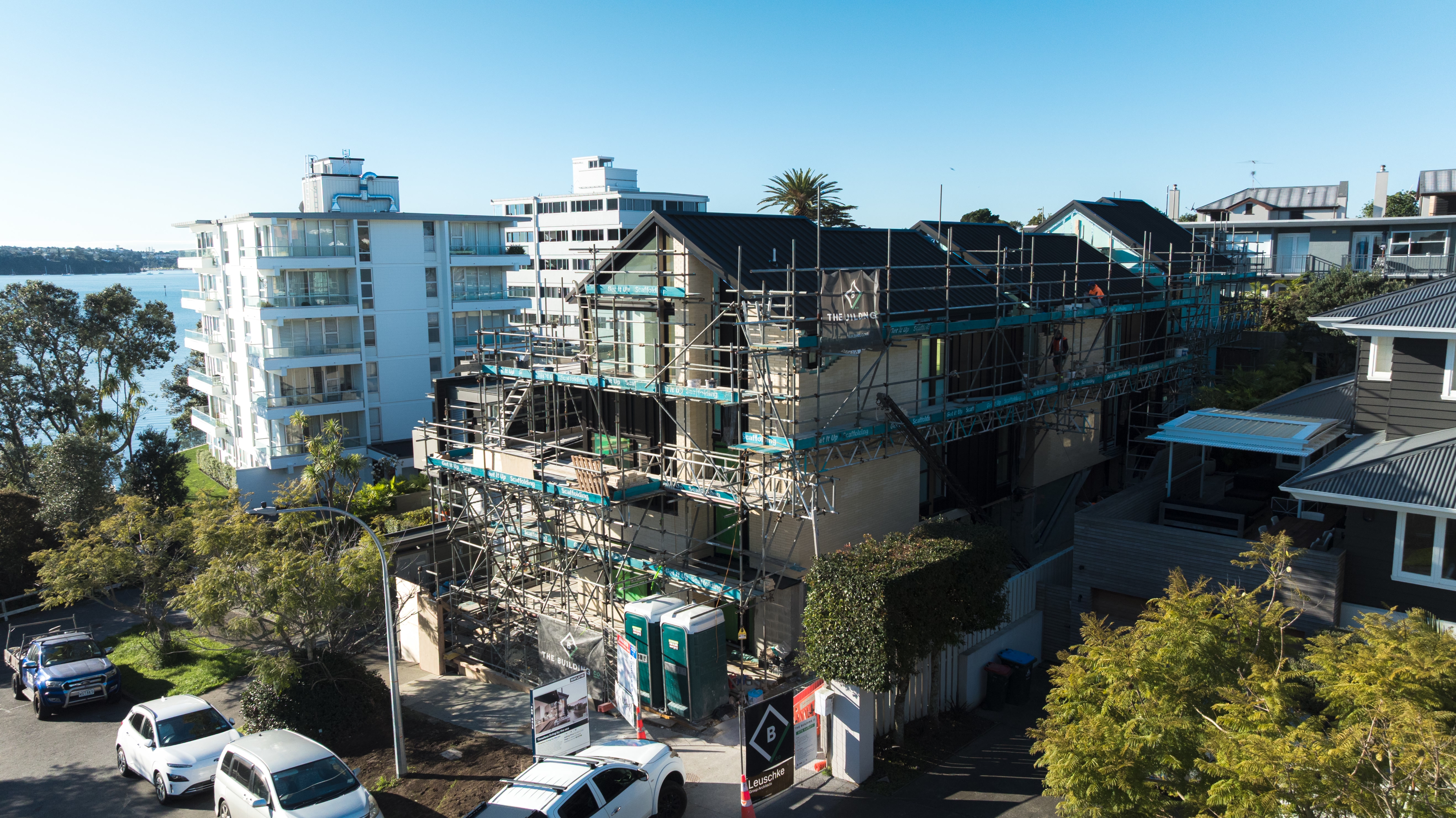
A project can’t draw construction funding until it’s legally able to be built. So the first question is always where the consents sit.
Resource consent tells us the project is permitted in principle — the right number of dwellings, the right height, the right density for the site. Building consent tells us it can physically be constructed to code. The further along that pathway a project is, the less planning risk we’re carrying, and the faster a facility can activate.
That doesn’t mean we only look at fully consented projects. We regularly engage early, before building consent is granted, and structure the facility so the developer’s equity carries the project to the point where construction funding takes over. But we need a clear, credible line of sight to consent. A project relying on a discretionary outcome that hasn’t been tested is a different risk to one with consents in hand.
The practical point: the earlier you talk to us, the more we can shape the funding around your consent timeline rather than the other way round.
Conditions precedent are a work list, not fine print
Every letter of offer carries conditions precedent —the things that must be satisfied before the facility can be drawn. They are not decorative. Each one maps directly to a risk the lender is being asked to carry, and each one is something you can start as-sembling the day you receive the term sheet, or ear-ier.
Ours typically include:
• AML and KYC checks completed on the bor-rower and guarantors.
• A valuation addressed to the lender, supporting the as-if-complete value the facility is sized
against.
• A solicitor's review of the presales, confirming the required number and value of qualifying agreements, that purchasers are arm's length, that deposits are held by a stakeholder, and that sun-set dates carry a sensible margin beyond forecast completion.
• Contract works insurance for the build and pro-fessional indemnity certificates for the consul-tants.
• Evidence of the land position, including the set-tlement statement.
• The pre-construction report and cost-to-com-plete certification.
That last item deserves its own section, because it
is the heart of the whole process.
The pre-construction re-port: proving the project can finish
Cost-to-complete funding rests on one certifica-tion: that the facility, together with the borrower's
equity, is sufficient to complete the project. Before the first drawdown, someone has to be able to sign that statement — and everything in the pre-con-struction review exists to support it.
The budget is verified line by line. Construction cost is benchmarked on a per-square-metre basis
against comparable projects, and the basis of the pricing is recorded — a fixed-price contract, trade
quotes, or an elemental estimate. Contingency sits as its own line; a healthy allowance is typically in
the range of five to ten per cent of build cost, and a nil contingency is a finding, not a footnote. We
want to see the great majority of sub-trades fixed by quote before drawdown — on our deals the
benchmark is around 85 per cent — because a bud-get built on fixed pricing is a budget that holds.
Consents are checked as current, and their condi-tions are read properly. Some conditions gate the
programme — design compliance packs required before building consent, surveyor hold points at
foundation or roof — and some carry cost. Both need to be sequenced against the programme and
carried in the budget.
The contractor is assessed on track record, current workload and references, and the programme is
tested for realism, including float. Where the devel-oper is also the builder — common on smaller
schemes — there is often no head contract, which means no retentions, no liquidated damages and no performance bond. That is not automatically a problem, but it is a structural fact, and the re-
sponse is a stronger monitoring regime rather than a pretence that the protections exist.

Equity goes in first
One principle underneath all of this: the develop-er's contribution is spent before the facility draws.
Evidence of that equity — where it is and when it goes in — is a required input, not an afterthought.
Where equity is staged across the project rather than paid entirely up front, that can work, but it is
documented as a written undertaking and tracked at every drawdown, so the cost-to-complete posi-tion always holds.
What actually slows deals down
In our experience it is rarely one big failure. It is drift — small inconsistencies between documents
that each take a week to resolve. Lot counts that differ between the feasibility and the sales schedule. Presale totals that do not reconcile with the valuation's per-unit values. A valuation addressed to the borrower instead of the lender. Insurance cer-tificates that have not been issued yet. Consent conditions nobody has sequenced against the pro- gramme, discovered when the certifier reads them.
None of these are fatal. All of them are avoidable,and the fix is the same in every case: one consistent set of numbers and documents, assembled early, with the discrepancies found by you rather than by your lender.
Drawdown one — and every one after
Once the conditions precedent are cleared, the fa-cility opens and the rhythm of the project begins.
Claims come in monthly, certified against work ac-tually done, and funds are advanced against certi-fied cost. Monitoring is matched to the scale of the scheme: on smaller projects, certification built onsite visits, council inspection records, producer statements and invoices; on larger or more complex projects, an independent quantity surveyor. Where the contract provides for retentions, they are held through to code compliance and title.
The point of all of it is the same as the point of the pre-construction report: at every moment of the
project, the remaining funding covers the remain-ing cost.
The gap between a yes and the money is a measure of preparation
If there is one thing to take from this, it is that the period between approval and first drawdown is not dead time imposed by the lender — it is the project proving, on paper, that it can finish. Developers who arrive with consents and a conditions sched-ule, a budget built on real quotes, insurance certifi-cates issued, presale agreements with deposits banked and a valuation instructed to the lender can move through it in a fraction of the usual time.
And as we said last month, the best time to talk to a lender is before you need the money. If you are
planning a project and want to know exactly what the path from yes to first drawdown looks like for
it, talk to us early — we will give you the list up front.
NZMS is a non-bank development finance lender with over 40 years of industry experience, backed by Mansons TCLM. Over $5 billion in projects funded, $450M available.
Questions about CTC funding? Get in touch at nzms.co.nz or email [email protected]
Next article

25.06.26
What Makes a Deal Fundable: The Criteria Behind a Yes
Read now →